

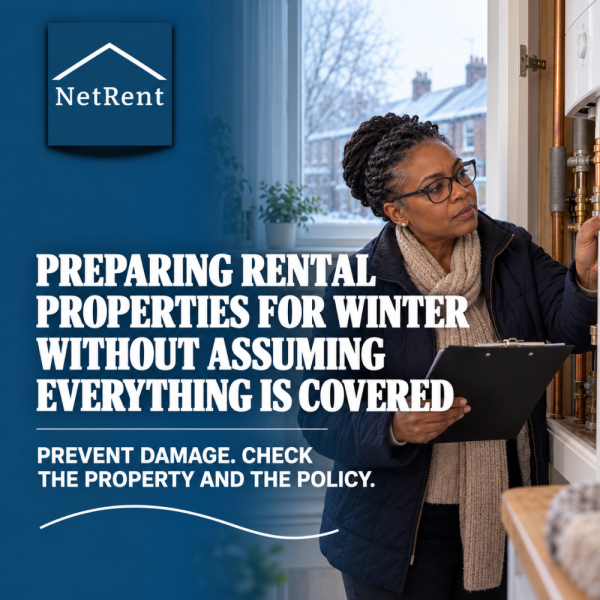
Winter can expose weaknesses that went unnoticed during milder weather. A blocked gutter causes water penetration, a poorly insulated pipe freezes or a leak in a vacant property remains undiscovered for days.
Landlord insurance may respond to certain insured events, subject to the policy wording, limits, excesses and conditions. However, insurance is not a maintenance contract and should never be treated as a substitute for preparing a rental property properly. The safest approach is to reduce preventable risks while checking what the policy actually requires.
What should landlords check before winter?
A useful winter inspection should cover the parts of the property most likely to be affected by cold, rain and storms. That normally means checking:
- Roof coverings, flashing, chimneys and visible signs of movement or damage
- Gutters, downpipes and drains for blockages, leaks or loose fittings
- External walls, seals, windows and doors for possible water entry
- Loft spaces, water tanks and exposed pipework
- The boiler, heating controls and hot-water system
- Outside taps and pipes in garages, basements or outbuildings
- Trees, fences, gates and other items that could become unstable in high winds
- The location and operation of the main water stop tap
Inspections should be appropriate to the property and completed safely by a competent person. Photographs, notes, invoices and maintenance records can demonstrate what was checked and provide useful evidence if damage later occurs.
Are burst pipes automatically covered?
Many property policies cover damage caused by an escape of water, but that does not mean every associated cost will be paid. The failed pipe, gradual deterioration, poor workmanship, wear and tear or failure to follow a policy condition may be treated differently from the resulting water damage.
Landlords should insulate pipes and tanks in vulnerable areas, repair dripping taps and ensure tenants can report problems quickly. Tenants should know where the stop tap is and how to use it safely in an emergency.
If a property is empty, the risk can increase because a leak may continue unnoticed. This makes the policy’s unoccupancy wording particularly important.
What changes when a rental property is unoccupied?
Policies do not all define an unoccupied property in the same way. Some impose conditions after a stated number of consecutive days; others restrict cover or require notification.
Conditions might include maintaining a minimum temperature, draining systems, turning off the water, arranging recorded inspections or securing the property. The correct action depends on the building, heating system and wording; turning off the water without understanding the installation may create another problem.
Avoid relying on a general rule such as “the property is covered for 30 days”. Check the schedule and wording, ask what is required and retain evidence of compliance, particularly during a tenancy change, renovation or extended void.
Heating is both a property and tenancy issue
In England, landlords have repairing responsibilities that include installations for space heating and heating water. Different legal and regulatory frameworks apply in Wales, Scotland and Northern Ireland, so landlords should follow the requirements for the nation in which the property is located.
Servicing and maintaining the system may help prevent breakdowns, frozen pipes and secondary damage. Test heating before cold weather, respond promptly to tenant reports and avoid delays to necessary repairs.
Buildings insurance does not necessarily pay for boiler failure. Mechanical breakdown, wear and tear, maintenance and insured damage are separate issues. Boiler or home-emergency products may help, but their limits, exclusions and servicing requirements must be checked.
Prevention and insurance perform different jobs
Winter preparation aims to prevent or limit damage. Insurance may respond when an insured event occurs and the relevant terms are met. Both matter, but one cannot replace the other.
Storm damage to a well-maintained roof may be assessed differently from long-standing deterioration. A pipe that freezes despite reasonable precautions may differ from a property left without heat or inspection contrary to an endorsement. The insurer assesses the cause, evidence and wording before deciding cover and settlement.
When damage occurs, protect people first, prevent further loss where reasonably possible, record the damage and report it promptly. Discuss permanent repairs and any required inspection with the claims contact, except where emergency action is needed for safety or damage limitation.
Why a personal insurance review matters before winter
No checklist can establish whether a landlord has the right cover. Properties differ by age, construction, location, occupancy, heating and use. Ten properties can present ten different risks, even on one portfolio schedule.
This is where NetRent differs from a transactional online referral. Drawing on more than 23 years of landlord-sector experience, we speak with every client to understand their properties and requirements before introducing them to Clear Insurance Management. That conversation can identify overlooked issues such as voids, non-standard construction, loss-of-rent limits, renovations or occupancy changes.
NetRent is an insurance introducer, not the broker. Clear provides regulated broking services, explores the available options and arranges cover where appropriate. NetRent remains available throughout because our aim is a long-term working relationship, not merely passing on a name. Through the scale of the landlord business introduced and our relationship with Clear, we seek appropriate, cost-effective insurance while recognising that the cheapest premium is not always the best outcome.
Review the property and the policy now
Before colder weather arrives, inspect each property, complete necessary maintenance and review winter or unoccupancy conditions. If renewal is approaching, do not renew on assumptions. Send NetRent your schedule and renewal documents so we can understand your requirements before introducing you to Clear.
Call 01352 721300 or email insurance@netrent.co.uk. You can also explore NetRent’s Property Insurance Information Centre for further practical guidance on landlord risks, cover and claims preparation.
NetRent does not provide legal advice. This article represents our general understanding of the landlord insurance and rental property market and is provided for information only.