

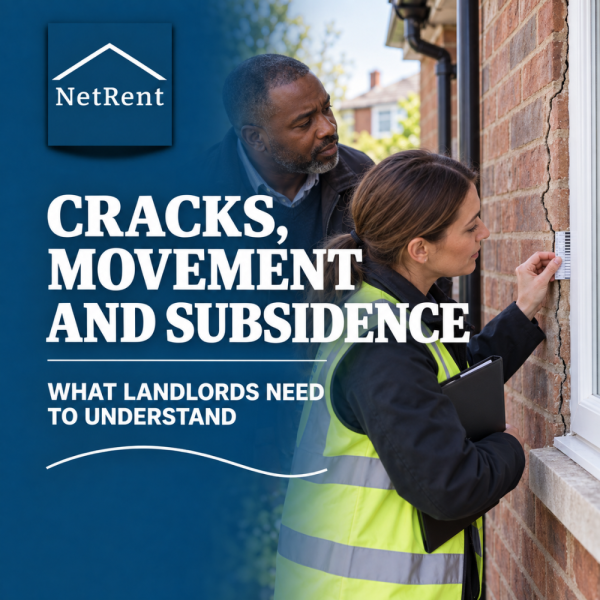
A new crack can be alarming, but it does not automatically mean subsidence. Buildings move for several reasons, from normal settlement and thermal movement to defective drains or changes beneath the foundations.
Insurance does not cover every form of cracking or movement. A landlord should record the evidence, protect occupants and notify the insurer or broker promptly when structural movement may be involved.
What is subsidence?
Subsidence is downward movement of the ground supporting a building. It differs from settlement as a building adjusts after construction and from heave, where the ground moves upwards.
Possible causes include:
- Shrinkage of clay soil during prolonged dry weather
- Trees or large shrubs drawing moisture from susceptible ground
- Leaking or damaged underground drains
- Poorly compacted made ground
- Historic mining or other local ground conditions
- Changes affecting nearby land or structures
Identifying the cause requires appropriate investigation. A landlord, tenant or contractor should not label damage as subsidence purely from its appearance.
Which warning signs deserve attention?
Small plaster cracks can result from drying or temperature changes. Other cracking may justify closer examination, particularly where it is new, widening or accompanied by other changes.
Warning signs can include:
- Diagonal cracks around doors or windows
- Cracks visible internally and externally in corresponding positions
- Cracking that is wider at one end
- Doors or windows beginning to stick without an obvious reason
- Separation where an extension joins the main building
- Distortion to floors, walls or openings
- Wallpaper rippling where there is no damp
None confirms an insured subsidence claim. Significance depends on the building, location, crack pattern and whether movement is continuing.
Act early but do not panic
Safety comes first. If there is concern about falling masonry, unstable walls, damaged services or another immediate hazard, restrict access and seek urgent professional assistance.
Photograph wide views and close-ups. Record the date, room, approximate crack width and related sticking doors, sloping surfaces or external damage. Ask tenants when they noticed it and whether it has changed.
Contact the insurer or broker promptly where subsidence or structural movement may be suspected. The insurer can explain the claims process and whether it will appoint a loss adjuster, engineer or surveyor.
Do not repeatedly fill, plaster or paint over significant cracks before they have been assessed. Cosmetic work can obscure evidence and may need to be removed during the investigation.
What will the insurer investigate?
The insurer needs to establish both the cause of movement and whether it falls within the policy. Investigation may include:
- Inspection of the building and crack pattern
- Review of construction, extensions and previous alterations
- Drain surveys or leakage tests
- Trial holes to examine foundations and soil
- Soil, root or arboricultural analysis
- Checks on nearby trees and vegetation
- Monitoring to determine whether movement is continuing
Monitoring may extend across seasons because soil moisture and movement can change during the year. Permanent repairs need to address the cause and allow stabilisation; repairing the visible crack alone may not solve the problem.
Underpinning is not the automatic answer to every case. The appropriate remedy might involve drain repairs, vegetation management, local structural work or monitored stabilisation. The insurer and appointed specialists will decide what is reasonable under the policy.
Check the subsidence excess
Buildings policies often apply a specific excess to subsidence, heave or landslip claims, which may be substantially higher than the standard buildings excess. The schedule should show the amount the policyholder must contribute.
Check how the excess applies where several areas are damaged or movement develops over time. Do not assume that the ordinary escape-of-water or accidental-damage excess will apply simply because leaking drains or another event may have contributed.
Previous movement must be described accurately
At quotation and renewal, insurers may ask about previous subsidence, settlement, heave, landslip, cracking, underpinning, structural repairs or investigations. Answer the precise questions fully and retain supporting reports.
If a survey mentioned historic movement but concluded that it was longstanding, that information should not be silently disregarded. Provide the wording and allow the insurer to assess it.
A previous subsidence claim can affect the availability, price and terms of future insurance. Before changing insurer, discuss the history and continuity of cover carefully rather than selecting a new policy on premium alone.
Consider the tenancy and rental income
The landlord must continue managing safety, repairs and communication with the tenant while the claim is investigated. Tell the insurer if rooms cannot be used or the property may become uninhabitable.
Loss-of-rent and alternative-accommodation cover are separate protections with their own limits and conditions. Check what the policy provides, how long payments can continue and what evidence the insurer requires before making commitments to the tenant.
Keep a timeline of inspections, reports, tenant communications, contractor visits and instructions from the insurer. This can be valuable during a long-running claim.
Reduce avoidable risks carefully
Maintain drains, gutters and water services, and investigate leaks promptly. Manage trees and shrubs with suitable professional advice. Removing or heavily pruning a mature tree without understanding the soil and building can create different risks, and legal or conservation restrictions may apply.
Cracking should neither be ignored nor assumed to be catastrophic. Early notification, reliable evidence and a proper diagnosis give the landlord and insurer the best opportunity to deal with the cause before arranging lasting repairs.
NetRent works with Clear Insurance Management and its experienced property-insurance team to help landlords review buildings cover, subsidence terms, excesses and previous movement information. Clear provides claims support for policies arranged through Clear, while the insurer remains responsible for claim and settlement decisions.
To discuss your landlord insurance, telephone 01352 721300 or email insurance@netrent.co.uk.
NetRent does not provide legal advice. This article represents our general understanding of the landlord insurance and rental property market and is provided for information only.