

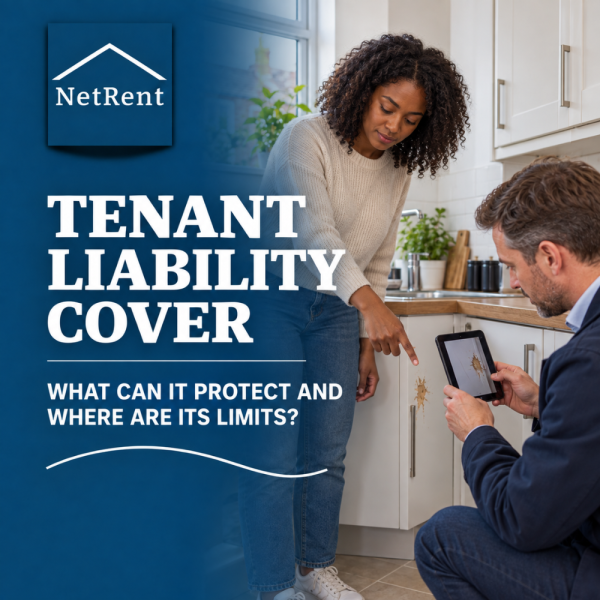
A tenant cracks a landlord-owned washbasin, spills paint across a fitted carpet or damages supplied furniture. Paying for the loss is not always straightforward.
Tenant liability cover may help with accidental damage for which a tenant is legally responsible. Protection varies, and it should not be confused with contents insurance, a deposit or landlord insurance.
What is tenant liability cover?
Tenant liability cover is designed to address specified damage to property belonging to the landlord. It may be sold separately or included within another tenant insurance product.
Depending on the wording, it could cover a tenant’s legal liability for accidental damage to:
- The landlord’s buildings, fixtures and fittings
- Fitted kitchens and bathrooms
- Carpets, curtains and other supplied furnishings
- Furniture, appliances or other landlord-owned contents
- Internal doors, windows or sanitary ware
Accidental damage and liability are not the same thing
The existence of damage does not automatically mean that the tenant is legally responsible or that an insurer must pay.
The insurer may consider how the incident occurred, what the tenancy agreement says, who owned the item and whether the tenant failed to take reasonable care. It will also apply the definitions, exclusions, excess and limits in the policy.
An isolated accident may be treated differently from deterioration that developed over months. Damage caused by a leaking pipe might fall primarily under the landlord’s buildings insurance and repairing obligations, while damage caused when a tenant accidentally drills through the pipe could raise different questions.
Landlords should report facts rather than assume liability. A tenant’s apology does not determine how an insurer will interpret the event.
What may be covered?
Subject to the wording, tenant liability insurance may respond to events such as accidentally damaging a landlord’s worktop, dropping an object that cracks a sink, staining a supplied carpet or breaking landlord-owned furniture.
The landlord should check whether the policy pays for repair, replacement or compensation and whether deductions apply for age, condition or wear. A settlement should not be assumed to provide a brand-new replacement for an old item.
Where are the usual limits?
Common restrictions can include:
- A maximum amount for each claim or policy period
- An excess payable by the tenant
- Exclusions for deliberate, reckless or criminal acts
- Wear and tear, deterioration and gradual damage
- Poor maintenance or an inherent defect
- Damage that existed before the policy began
- Pet damage unless specifically included
- Damage to communal areas or property not listed in the policy
- Business or unauthorised use of the home
- Repairs arranged without the insurer’s agreement
Policies may restrict claims involving another household member, guest or subtenant. The word “liability” does not create unlimited protection.
It does not insure the tenant’s belongings
Tenant liability cover protects against specified liability for damage to the landlord’s property. It does not ordinarily insure the tenant’s television, computer, clothing, furniture or other possessions.
A tenant needs separate contents insurance to protect their own belongings. Liability cover does not normally pay rent arrears, removal costs, alternative accommodation or household bills unless the policy says otherwise.
It does not replace landlord insurance
The landlord remains responsible for arranging suitable insurance for the building and any landlord-owned contents. Tenant liability cover cannot be relied upon as the main protection for fire, flood, storm, escape of water, subsidence, loss of rent or property owners’ liability.
It also does not transfer the landlord’s repairing and safety responsibilities. Damage resulting from an old roof, defective wiring, worn plumbing or another maintenance problem does not become the tenant’s responsibility simply because liability cover exists.
For a significant incident, the landlord should notify their insurer promptly and disclose that tenant liability cover may exist. Insurers can determine which policy may respond. Neither party should arrange permanent repairs or discard evidence without guidance, except where urgent action is required for safety or to prevent further damage.
How does it interact with the tenancy deposit?
A tenancy deposit can provide security against certain losses, but it is not an insurance policy. Any proposed deduction should reflect the landlord’s actual, evidenced loss and allow for the item’s age, condition and normal wear.
An inventory, check-in photographs and inspection reports can establish the previous condition. Photographs of the incident, repair estimates and the tenant’s account can support a claim or deposit proposal.
A landlord cannot recover the same loss twice. Any insurance or tenant payment must be considered before seeking a deposit deduction. If agreement cannot be reached, the relevant deposit scheme or court may determine the dispute.
Can a landlord require a tenant to buy it?
In England, landlords and agents cannot require tenants to pay for insurance as a condition connected with an assured tenancy. A tenant may buy suitable cover voluntarily, but it should not be presented as a compulsory charge.
Wales has its own restrictions on tenant payments, while Scotland and Northern Ireland operate under different legislation. Landlords and agents should check the current position in the relevant nation before adding any insurance requirement to an advert, application process or tenancy agreement.
Check the landlord’s protection first
Tenant liability cover can help with some accidental damage, but its value depends on what is covered, who is liable and the policy limits. It should sit alongside accurate inventories, sensible property management and appropriate landlord insurance.
NetRent works with Clear Insurance Management and its experienced property-insurance team to help landlords review their buildings, contents, accidental-damage and liability protection. Clear provides claims support for policies arranged through Clear, while the insurer remains responsible for decisions about cover and settlement.
To discuss your landlord insurance, telephone 01352 721300 or email insurance@netrent.co.uk.
NetRent does not provide legal advice. This article represents our general understanding of the landlord insurance and rental property market and is provided for information only.