

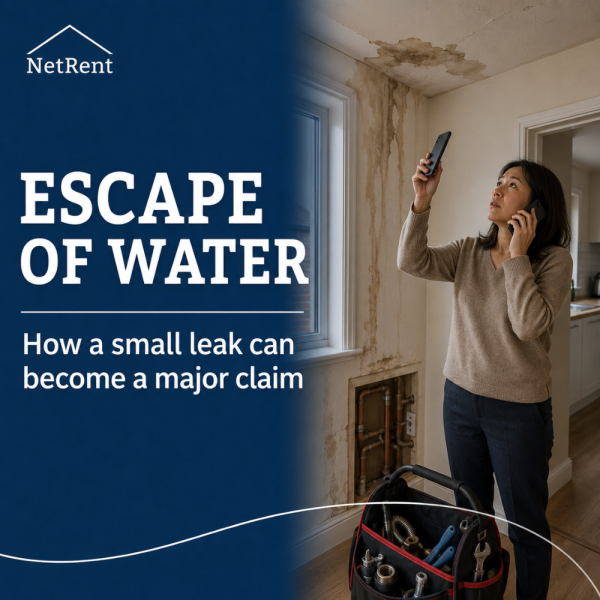
A leaking pipe may begin with a small stain on a ceiling or a patch of damp beside a radiator. If it is not investigated quickly, water can spread through floors, walls, insulation, electrical systems and neighbouring properties.
For landlords, an escape of water can lead to extensive repairs, an uninhabitable property, lost rental income and significant disruption for tenants.
Insurance may provide important protection, but landlords should understand what their policy covers and what to do when a leak is discovered.
What is an escape of water?
In insurance terms, an escape of water generally involves water leaking from a fixed water or heating installation, appliance or pipe.
Examples may include:
- A burst or leaking water pipe
- A failed connection to a washing machine or dishwasher
- A leaking water tank
- A damaged central-heating pipe
- Water escaping from a bath, shower or toilet
- A leak from the property above
- A failed radiator or boiler component
The exact definition and protection will depend on the individual policy.
Escape of water should not be confused with flooding caused by water entering the property from outside. It may also be treated differently from gradual damp, condensation, defective seals or damage resulting from poor maintenance.
Why can a small leak cause so much damage?
Water does not always remain close to the source of a leak.
It can travel behind walls, underneath flooring and through ceilings before becoming visible. By the time a tenant reports staining, the surrounding materials may already be saturated.
A leak can damage:
- Plaster and decoration
- Ceilings and flooring
- Kitchen units and worktops
- Electrical wiring
- Landlord-owned furniture
- Insulation and structural timbers
- Adjoining flats or communal areas
The property may also need professional drying before reinstatement can begin. This can extend the claim and delay the tenant’s return.
What should happen immediately?
Personal safety comes first. If water is close to electrical installations, occupants should not touch affected fittings or take unnecessary risks.
Where it is safe to do so, the landlord, tenant or managing agent may need to:
- Turn off the water at the stopcock
- Switch off the affected appliance
- Contact an emergency plumber
- Move undamaged items away from the water
- Use containers or towels to limit further spread
- Notify occupants of neighbouring properties
- Photograph the damage
- Contact the broker or insurer promptly
Reasonable emergency action should be taken to prevent further damage. However, the landlord should avoid beginning permanent repairs or disposing of damaged items before speaking to the insurer, unless action is required for safety or to prevent the loss from worsening.
Finding the leak may be a separate issue
The visible damage does not always reveal the source.
A ceiling stain might come from a bathroom above, a heating pipe beneath the floor or water travelling from another part of the building. Finding the problem may require floors, walls or ceilings to be opened.
Some policies include trace-and-access protection. This may contribute towards the reasonable cost of locating the source of an insured water leak and repairing the damage caused while gaining access.
It does not necessarily pay for repairing the pipe, appliance or component that failed. Limits and conditions can also apply.
Landlords should check:
- Whether trace-and-access cover is included
- The financial limit
- What type of leak must have occurred
- Whether prior authorisation is required
- Whether the failed item itself is insured
Maintenance and insured damage are not the same
Insurance is designed to respond to specified events, not to replace routine maintenance.
A policy may cover resulting water damage while excluding the cost of repairing an old pipe, failed seal or worn appliance that caused it. Gradual damage, corrosion, repeated leakage or a problem known about but left unresolved may also create difficulties.
Landlords should investigate warning signs such as:
- Falling boiler pressure
- Unexplained increases in water usage
- Persistent damp patches
- Discoloured ceilings
- Loose bathroom sealant
- Dripping overflows
- Repeated reports of mould or moisture
- Damaged pipe insulation
Records of inspections, maintenance and earlier reports can become important when the insurer investigates what happened.
Evidence supports the claim
Landlords and agents should create a clear record as soon as possible.
Useful evidence may include:
- Dated photographs and videos
- The tenant’s original report
- The time the water was isolated
- Emergency plumber’s findings
- Invoices and receipts
- Details of damaged landlord-owned items
- Inspection and maintenance records
- Communication with neighbouring owners or managers
If flooring, plaster or other materials must be removed urgently, photograph them first wherever possible.
The insurer may appoint a loss adjuster, surveyor or specialist drying company. Following the agreed process can help avoid duplication and unnecessary costs.
Check the escape-of-water excess
Escape-of-water claims may carry a different—and sometimes higher—excess than other types of property damage.
A landlord comparing quotations should therefore look beyond the annual premium. A cheaper policy could leave the landlord paying considerably more towards a water-damage claim.
The schedule and policy wording should be checked for:
- The applicable excess
- Buildings and contents protection
- Trace-and-access cover
- Loss-of-rent limits
- Alternative-accommodation cover
- Unoccupied-property conditions
- Requirements concerning heating or water systems
Could loss of rent be covered?
If insured damage makes the property uninhabitable, the policy may provide loss-of-rent protection.
The amount and payment period will be limited by the policy. Cover will not necessarily apply whenever a tenant temporarily leaves; the loss normally needs to result from insured damage.
Landlords should consider whether the stated limit reflects the current rent and the time a serious repair could take.
Alternative accommodation is a separate consideration and should not be assumed to be identical to loss-of-rent cover.
Empty properties require particular attention
Water leaks in empty properties can remain undiscovered for much longer.
Policies commonly apply additional conditions when a property is unoccupied beyond a specified period. These may concern inspections, heating, draining water systems or notifying the insurer.
The definitions and conditions differ between policies, so landlords should check them before a tenant leaves—particularly during winter.
Responsibilities differ across the UK
Landlords generally have repairing responsibilities involving the structure and installations for water, sanitation and heating, but the legal framework and terminology differ across England, Wales, Scotland and Northern Ireland.
Insurance does not remove those responsibilities. A landlord should respond promptly to a tenant’s report, arrange appropriate investigation and keep a written record of the action taken.
Where another flat or communal pipework may be involved, the freeholder, factor, management company or neighbouring owner may also need to be contacted.
Review your protection before a leak occurs
At renewal, landlords should ask:
- What escape-of-water excess applies?
- Is trace-and-access cover included?
- Are landlord-owned contents protected?
- Is the loss-of-rent limit sufficient?
- What conditions apply during unoccupancy?
- What emergency contact arrangements are available?
NetRent works with Clear Insurance Management and its experienced property-insurance team to help landlords examine these details properly.
If your landlord insurance is approaching renewal, send us your existing documents so we can review the cover, conditions and premium. You can also contact us when purchasing or adding another rental property.
Telephone: 01352 721300
Email: insurance@netrent.co.uk
A small leak can become a major claim. Appropriate insurance, regular maintenance and a prompt response can all help limit the damage.
NetRent does not provide legal advice. This article represents our understanding of rental property law.